Project Overview & Direct Cost Answer
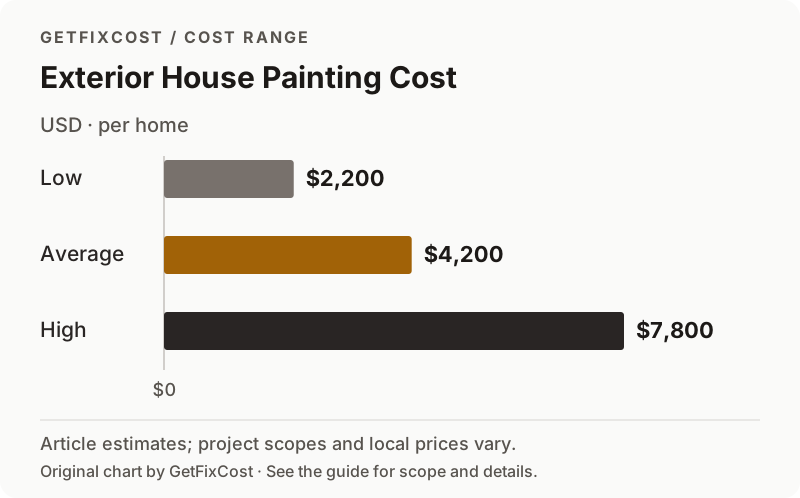
Painting the exterior of a residential home in the United States typically costs between $2,200 and $7,800, with the national average centering at $4,200 for a standard 2,000 square foot two-story home.
Overall costs range from $1.50 to $4.00 per square foot of paintable surface area. A straightforward single-story ranch with intact siding requiring minimal scraping can cost as little as $2,200 to $3,200. In contrast, a multi-story home with peeling historic wood siding, ornate Victorian trim, and difficult hillside access frequently reaches $6,500 to $10,500+.
Exterior painting is not merely a cosmetic enhancement; it is an essential protective coating against ultraviolet solar degradation, wind-driven moisture intrusion, and wood rot. Painting contractors allocate roughly 75% to 85% of their total bid to labor and meticulous prep work, with high-grade 100% acrylic exterior paint and primer accounting for the remaining 15% to 25%.
Quick-Reference Cost Table
| Home Size & Stories | Exterior Paintable Area | Average Cost Range | Typical Crew Time | Best Paint Material |
|---|---|---|---|---|
| Small 1-Story Ranch (1,200 Sq Ft) | 1,200 – 1,500 Sq Ft | $2,000 – $3,400 | 2 – 3 Days | 100% Acrylic Satin / Flat |
| Medium 2-Story (2,000 Sq Ft) | 2,000 – 2,500 Sq Ft | $3,200 – $5,800 | 3 – 5 Days | High-solids Acrylic Latex |
| Large 2-Story (3,000 Sq Ft) | 3,000 – 3,800 Sq Ft | $4,800 – $8,500 | 5 – 8 Days | Premium exterior elastomeric |
| Historic Victorian / Detailed Trim | 2,500 – 3,500 Sq Ft | $7,000 – $13,500 | 7 – 12 Days | Oil primer + multi-color acrylic |
| Stucco / Masonry Exterior | 2,000 – 2,800 Sq Ft | $3,500 – $6,500 | 4 – 6 Days | Breathable elastomeric coating |
Cost Factors That Impact Total Pricing
Several crucial factors determine your total exterior painting estimate:
- Surface Condition & Prep Intensity: Painting over clean, sound paint is fast. Scraping extensive flaking paint, hand-sanding peeling ridges, replacing rotten siding boards, and recaulking failed joints can triple preparation hours, adding $1,000 to $3,000.
- Siding Material: Smooth fiber cement and aluminum siding are fast to spray. Rough cedar shakes, porous stucco, or grooved wood lap siding consume up to 50% more paint volume and require back-rolling to force paint into deep pores.
- Number of Stories & Height: Working on tall 28-foot extension ladders and staging pump jacks on second and third stories slows painter progress significantly, increasing labor rates by 20% to 35%.
- Number of Paint Colors (Accents & Trim): Painting a single body color with one trim color is economical. Multi-color schemes requiring masking window muntins, porch railings, soffits, and accent doors add $400 to $1,200.
- Paint Quality & Brand: Builder-grade exterior paint costs $30 to $40 per gallon. Premium 100% acrylic paints (like Sherwin-Williams Emerald or Benjamin Moore Aura) cost $75 to $105 per gallon, but resist fading, blistering, and mildew for 12 to 15 years.
Regional Cost Variations Across the US
Painter labor rates and local weather seasons influence painting bids:
- West Coast (CA, WA, OR): High painter hourly wages ($60–$95/hr) and strict zero-VOC environmental rules place average exterior jobs at $4,500 to $7,800.
- Northeast (NY, MA, PA): Short exterior painting seasons (May to October) and historic wood architecture yield averages of $4,200 to $7,200.
- Midwest (IL, OH, MI): Moderate labor overhead keeps average two-story homes around $3,200 to $5,200.
- South & Sunbelt (TX, FL, GA): Intense UV exposure and high humidity demand mildewcide-rich formulas and elastomeric stucco paints, averaging $2,800 to $4,800.
Repair vs. Replace: How to Decide
Determine whether repainting or replacing your exterior siding is the wiser investment:
- When to Paint: If your siding (wood, fiber cement, aluminum, or vinyl) is structurally sound, firmly fastened, and free of dry rot or terminal embrittlement, repainting for $3,000 to $5,500 restores full weatherproofing and curb appeal.
- When to Replace Siding: If wood siding has widespread dry rot, vinyl siding is brittle and cracked across multiple elevations, or panels are severely warped, painting is a temporary coverup that will peel within two years. Siding replacement ($10,000 to $22,000) is required.
- The 50% Rule: If repairing rotten trim, replacing warped lap boards, and lead-safe scraping costs exceed 50% of a residing project, invest in modern low-maintenance fiber cement siding.
DIY vs. Hiring a Professional & Safety Warnings
Painting a single-story shed or detached garage on a weekend is manageable for motivated DIYers. However, painting an entire multi-story house is physically punishing and hazardous.
Falls from extension ladders remain a leading source of residential trauma. Maneuvering heavy five-gallon paint buckets and high-pressure airless sprayers while balanced 20 feet in the air requires experience. Furthermore, pre-1978 homes almost certainly contain toxic lead-based paint. Dry-scraping or pressure-washing lead paint without EPA Lead-Safe Certified containment contaminates surrounding soil with toxic lead dust.
Professional painting contractors carry full liability insurance, employ EPA Lead-Safe Certified technicians, own commercial pressure washers and airless spray rigs, and back their workmanship with 2 to 5-year peeling warranties.
Warning Signs You Need Action Immediately
Inspect your home exterior for these definitive symptoms of coating failure:
- Alligatoring or Flaking Paint: Paint cracking into patterns resembling reptile scales indicates multiple coats have lost adhesion and must be scraped to bare wood.
- Chalking Residue: Running your finger along siding leaves a powdery residue, signaling the paint binder has disintegrated under UV exposure.
- Wood Discoloration & Soft Sills: Dark water-stained wood or soft spots on window sills indicates moisture is penetrating bare lumber.
- Hairline Cracks in Stucco: Small cracks in stucco allow rainwater to enter, where winter freeze-thaw cycles pop off large chunks of masonry.
- Mildew and Algae Growth: Dark green or black spotting along north-facing walls indicates the paint’s mildewcide protection has worn off.
Hidden Costs & Contractor Pitfalls
Scrutinize exterior painting estimates for these commonly omitted items:
- Extensive Carpentry & Wood Rot Repair: Replacing rotten fascia boards, window brickmould, or lap siding pieces costs $50 to $120 per hour in carpentry labor plus materials.
- Lead Paint Containment & Disposal: Complying with EPA RRP containment regulations on pre-1978 homes adds $500 to $1,500 in specialized plastic sheeting, HEPA filtration, and disposal fees.
- Landscaping & Window Masking: Masking roof overhangs, brick foundations, decks, and covering shrubbery requires hours of prep labor.
- Two Coats vs. Single Coat: Ensure the proposal explicitly specifies two full topcoats over primer; cheap bids often cut corners with a single thin sprayed coat.
How to Save Money and Vet Contractors
Maximize your exterior painting budget with these smart consumer tips:
- Invest in Top-Tier Paint: The difference in paint material cost between cheap paint ($35/gal) and top-tier paint ($85/gal) on a 2,000 sq ft home is only $400 to $600. Paying slightly more for premium paint extends the paint job’s lifespan from 6 years to 12+ years.
- Perform Ground-Level Landscaping Prep Yourself: Trimming bushes and tree branches 2 to 3 feet back from siding saves painters hours of ladder staging time.
- Schedule in Late Spring or Early Autumn: Scheduling during shoulder seasons can secure a 5% to 10% discount from contractors seeking to fill their calendar.
- Demand Written Two-Coat Specifications: Require proposals to specify exact paint brand, line, primer application on bare wood, and two full finish coats.
Typical Project Timeline & Process
A professional residential exterior paint job proceeds through these phases:
- Phase 1: Power Washing & Drying (Day 1): Siding is washed with commercial cleaners to remove dirt, mold, and chalking residue, followed by 24 to 48 hours of drying.
- Phase 2: Scraping, Sanding & Masking (Days 2 to 3): Loose paint is scraped, rough edges feather-sanded, bare wood spot-primed, windows masked, and landscaping tarped.
- Phase 3: Caulking & Sealing (Day 3): Gaps around window frames, corner boards, and siding laps are sealed with premium exterior elastomeric caulk.
- Phase 4: Finish Painting & Trim (Days 4 to 5): Siding is sprayed and back-rolled with two coats of paint, trim and doors are hand-brushed, and final touchups and magnetic nail sweeps are completed.
Next Steps & Estimate Checklist
Before scheduling painting contractor walkthroughs:
- Inspect your exterior walls and note areas with peeling paint, rotted wood, or open gaps.
- Decide on body and trim color palettes and check HOA approval guidelines if applicable.
- Solicit written quotes from three licensed, insured painting contractors demanding itemized prep and two-coat specifications.
Frequently Asked Questions
01. How much does it cost to paint a 2,000 square foot house exterior?
02. How much do painters charge per square foot for exterior painting?
03. How long does a professional exterior paint job last?
04. What is the most important step in exterior painting?
05. Can you paint vinyl or aluminum siding?
Related Cost Guides
More in this trade →
Gutter Replacement Cost
Get realistic gutter replacement costs for aluminum, copper, and vinyl systems, including fascia repairs and downspouts.
Siding Replacement Cost
Understand siding replacement costs for vinyl, fiber cement, wood, and metal materials, including labor rates.