Project Overview & Direct Cost Answer
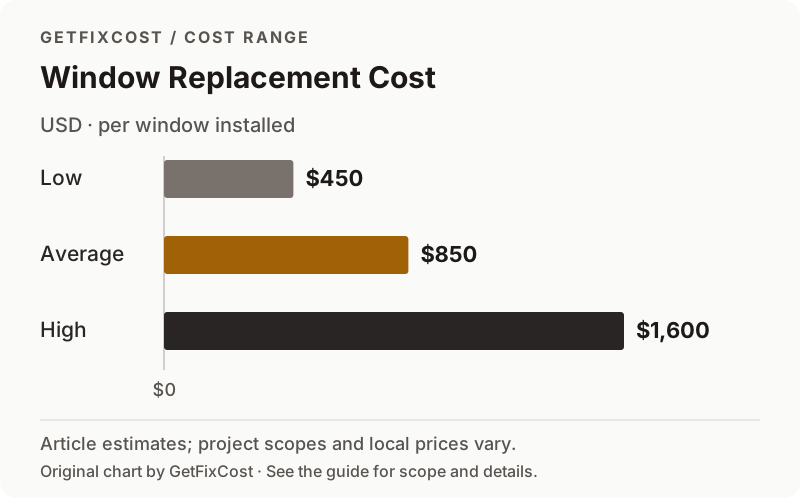
Replacing residential windows in the United States typically costs between $450 and $1,600 per window, with the national average centering at $850 per window for double-hung, double-pane vinyl units installed by a professional window contractor.
For an entire home with 10 to 15 windows, typical project totals range from $6,500 to $16,500 for mid-tier vinyl units and can climb to $14,000 to $28,000 for premium fiberglass, composite, or wood-clad windows. Pocket insert replacements into existing sound window frames represent the most cost-effective option, while full-frame tear-outs requiring exterior trim and siding repair fall on the higher end of the spectrum.
Labor typically comprises 30% to 45% of the total window estimate, averaging between $150 and $350 per window depending on story height, accessibility, and whether structural casing repairs are required. Experienced two-person window installation crews generally replace 6 to 10 pocket windows per workday.
Quick-Reference Cost Table
| Frame Material | Cost Per Window (Unit Only) | Average Installed Cost (Per Window) | Whole-Home Estimate (10 Windows) | Expected Lifespan |
|---|---|---|---|---|
| Standard Vinyl | $250 – $550 | $450 – $900 | $4,500 – $9,000 | 20 – 30 Years |
| Composite / Fibrex | $400 – $800 | $700 – $1,300 | $7,000 – $13,000 | 30 – 40 Years |
| Fiberglass | $500 – $950 | $850 – $1,500 | $8,500 – $15,000 | 35 – 50 Years |
| Aluminum-Clad Wood | $700 – $1,400 | $1,100 – $2,200 | $11,000 – $22,000 | 30 – 50+ Years |
| Historic Custom Wood | $900 – $2,000 | $1,400 – $3,200 | $14,000 – $32,000 | 40 – 60+ Years |
Primary Factors Affecting Price
Several material and structural variables dictate where your window replacement project falls within the pricing spectrum:
- Frame Material Construction: Vinyl remains the most popular and affordable choice, offering solid thermal insulation and zero painting maintenance. Composite materials (such as wood-polymer blends) offer increased rigidity and narrower sightlines. Fiberglass frames expand and contract at the exact same rate as glass, virtually eliminating seal failure. Aluminum-clad wood frames offer unmatched interior architectural beauty but require higher investment.
- Glass Packages & Energy Star Ratings: Single-pane windows are obsolete. Modern installations utilize double-pane or triple-pane insulated glass units (IGUs) filled with argon or krypton insulating gas and coated with microscopic Low-Emissivity (Low-E) metallic layers. Upgrading from standard double-pane to triple-pane glass adds $120 to $250 per window, which is worthwhile in extreme northern heating zones.
- Window Style & Operating Mechanism: Simple single-hung or double-hung windows are the most cost-effective. Casement windows that crank outward provide superior airtight compression seals but cost 15% to 25% more. Large picture windows, sliding glass doors, and architectural bay or bow window assemblies range from $1,500 to $4,500 installed.
- Installation Scope (Pocket vs. Full-Frame): In a pocket replacement (retrofit), the existing exterior casing, sill, and interior trim remain untouched; the old sashes are removed, and a new custom-sized window slides into the existing pocket. If the existing wooden sill or frame is rotted, or if you want to increase the glass viewing area, a full-frame installation is required, adding $200 to $450 per opening in framing and trim labor.
- Upper Story & Access Premiums: Installing second-story or third-story windows requiring extension ladders, scaffolding, or maneuvering around steep roof pitches adds roughly 10% to 20% in labor overhead.
Regional Cost Variations Across the US
Climate zone requirements and local trade wages create notable regional differences in window replacement quotes:
- Northeast & Upper Midwest (New York, Massachusetts, Minnesota): Severe winter cold requires Energy Star Northern Zone certified Low-E glass with low U-factors (under 0.25). Older housing with weighted sash pockets and union labor rates places average installed costs at $750 to $1,400 per window.
- West Coast (California, Washington, Oregon): Stringent energy codes (Title 24) and high living costs result in typical vinyl replacements averaging $800 to $1,500 per window.
- Southeast & Florida Coast (Miami, Tampa, coastal Carolinas): Coastal building codes mandate hurricane-rated impact-resistant laminated glass capable of withstanding wind-borne debris. Impact windows average $900 to $1,800 per window, but lower homeowner insurance premiums significantly offset the investment.
- Southwest & Inland South (Texas, Arizona, Georgia): Strong sun exposure necessitates Low-E coatings with low Solar Heat Gain Coefficients (SHGC) to block infrared solar heat. Competitive labor markets keep standard vinyl installations between $500 and $850 per window.
Repair vs. Replace: Making the Right Call
Homeowners should balance minor cosmetic or mechanical flaws against comprehensive thermal failure:
- When to Repair: If your existing window frames are structurally sound with rot-free wood or unwarped vinyl, and the issues are mechanical—such as broken sash cords, failed balance springs, damaged crank handles, or cracked weatherstripping—a professional repair costing $100 to $250 per window restores smooth operation.
- When to Replace: If condensation or milky fog appears permanently trapped between the two panes of glass, the perimeter seals have failed, allowing moisture inside and leaking the insulating argon gas. If the wooden frame or sill shows soft rot, or if vinyl frames are warped and drafty, full unit replacement is necessary.
- The Comfort Threshold: If you feel noticeable drafts sitting next to windows during winter, or if single-pane condensation produces persistent mold along sills, replacing windows eliminates drafts and protects indoor air quality.
DIY vs. Hiring a Professional
While replacing a single pocket window in a ground-floor garage is accessible for handy homeowners, replacing whole-house windows is best left to professional crews.
Improperly installed windows cause severe hidden moisture damage: water penetrating unsealed exterior head flashing or incorrectly lapped building wrap runs silently down interior wall cavities, rotting structural framing studs and breeding toxic black mold long before visible water stains appear inside. Furthermore, window openings in older homes are rarely perfectly square; professional installers know how to shim, square, insulate with low-expansion foam, and cap exterior perimeters with custom-bent aluminum coil stock.
Certified window contractors provide factory-backed warranties covering accidental glass breakage, seal failure, and lifetime installation workmanship.
Warning Signs You Need Action Now
Inspect your windows periodically for these clear indicators of structural and thermal decline:
- Foggy Condensation Between Panes: Moisture trapped between glass panes that cannot be wiped away from either side confirms that the factory airtight seal has broken, drastically degrading insulating value.
- Soft, Spongy Wood Along Sills: Probe wooden window sills with a screwdriver. Soft, crumbling wood indicates advanced fungal rot caused by exterior water penetration.
- Difficult Operation (Sticking or Falling Sashes): Windows that require brute force to pry open or sashes that slam shut unexpectedly suffer from warped frames or broken internal counterbalance mechanisms.
- Noticeable Outside Noise Infiltration: If you can clearly hear street traffic, lawnmowers, or neighborhood conversation through closed windows, sound attenuation has failed alongside thermal insulation.
Hidden Costs and Common Pitfalls
Review written window proposals to identify these frequent extra charges:
- Dry Rot and Termite Damage Repair: Once old window frames are removed, hidden rotted framing studs or headers may be exposed. Budget an extra $150 to $400 per affected opening for structural wood repairs.
- Exterior Aluminum Trim Capping: Custom-bending aluminum trim coil around exterior brick molds prevents water intrusion and eliminates future painting. Confirm whether your quote includes this service (typically $50 to $100 per window).
- Lead Paint Containment in Pre-1978 Homes: Federal EPA RRP (Lead Renovation, Repair, and Painting) regulations require certified containment procedures when disturbing paint in pre-1978 homes, adding $30 to $75 per window.
How to Save Money and Get Fair Quotes
Avoid common window sales traps with these consumer protection strategies:
- Avoid High-Pressure “Today Only” Sales Pitches: Some window replacement companies deploy aggressive in-home sales representatives who quote exorbitant initial prices ($2,000+ per window) and offer dramatic “same-day” discounts to force signatures. Never sign a contract on the first sales presentation.
- Take Advantage of Whole-House Volume Discounts: Replacing 10 or more windows at once reduces contractor setup, permitting, and staging overhead, earning a 10% to 15% discount compared to doing two or three windows at a time.
- Claim Federal 25C Energy Efficiency Tax Credits: Energy Star certified replacement windows qualify for a federal income tax credit under the Inflation Reduction Act of up to $600 per year (30% of project cost).
- Compare at Least Three Written Estimates: Request itemized proposals specifying window brand (such as Andersen, Pella, Marvin, Simonton, or Milgard), frame material, glass package (U-factor and SHGC), and warranty details.
Typical Project Timeline
Understanding the installation process helps you plan your home routine:
- Phase 1: In-Home Consultation & Measurement (1 to 2 Weeks): The contractor takes rough measurements, discusses styles, and provides an estimate. Once approved, a master technician takes precision 1/8-inch measurements.
- Phase 2: Custom Factory Manufacturing (4 to 8 Weeks): Replacement windows are custom-fabricated to fit your home’s unique openings.
- Phase 3: Delivery and Staging (Day of Installation): Windows arrive on site, and crews lay protective drop cloths inside and outside work areas.
- Phase 4: Removal and Installation (1 to 2 Days): Crews systematically replace windows room by room, shimming, leveling, insulating with low-pressure foam, and securing units.
- Phase 5: Exterior Capping, Caulking & Cleanup (Day 2): Exterior aluminum capping is installed, high-grade exterior sealant is applied, and glass is cleaned for final inspection.
Next Steps
Count your home’s total window openings, identify drafty or foggy units, and request written itemized quotes from three verified local window installation contractors. Ensure every quote specifies U-factor ratings and manufacturer warranty terms.
Frequently Asked Questions
01. How much does it cost to replace a single residential window?
02. What is the total cost to replace all windows in an average home?
03. What is the difference between pocket replacement and full-frame replacement?
04. Do replacement windows really lower heating and cooling bills?
05. Can I replace windows myself to save on labor?
Related Cost Guides
More in this trade →
Front Door Replacement Cost
Find out what front door replacement costs, including materials, labor, hardware, and weatherproofing installation.
Garage Door Replacement Cost
Understand garage door replacement costs for single and double doors, including opener installation and labor.
Repair or Replace Old Windows: How to Decide
Compare window repair versus replacement costs, including energy efficiency gains and project timelines.