Project Overview & Direct Cost Answer
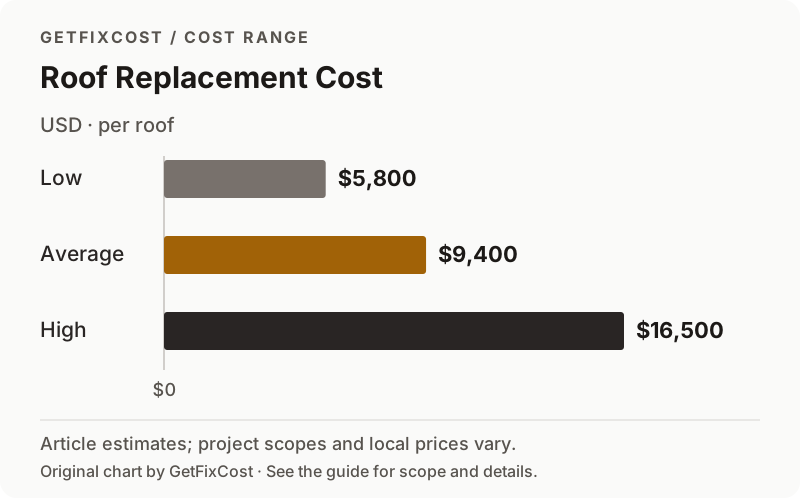
Replacing a residential roof in the United States typically costs between $5,800 and $16,500, with the national average centering at $9,400 for a standard 2,000 square foot home using architectural asphalt shingles.
Budget installations on simple, low-pitch ranch homes using basic three-tab asphalt shingles can start as low as $4,500 to $5,800. Conversely, steep-pitched multi-gable roofs using premium materials like standing-seam metal, cedar shake, or composite slate frequently reach $18,000 to $35,000 or more. Most residential roofing estimates range from $3.50 to $7.50 per square foot installed for asphalt materials, including tear-off, synthetic underlayment, and cleanup.
Roofing contractors calculate bids based on “roofing squares,” where one roofing square equals 100 square feet of roof surface. Because roof slope adds surface area beyond your home’s ground footprint, a 2,000 square foot single-story house generally requires between 22 and 26 roofing squares of material once pitch, overhangs, and valley waste are factored into the estimate.
Quick-Reference Cost Table
| Material Type | Cost Per Square (100 Sq Ft) | Typical Installed Cost (2,000 Sq Ft Roof) | Average Lifespan | Best Application |
|---|---|---|---|---|
| 3-Tab Asphalt Shingles | $320 – $450 | $6,400 – $9,000 | 15 – 20 Years | Budget-conscious repairs, rental properties |
| Architectural Shingles | $420 – $650 | $8,400 – $13,000 | 25 – 30 Years | Most suburban residences, high wind resistance |
| Standing-Seam Metal | $850 – $1,500 | $17,000 – $30,000 | 40 – 70 Years | Snow climates, modern designs, solar setups |
| Concrete / Clay Tile | $900 – $1,800 | $18,000 – $36,000 | 50 – 100 Years | Southwest and Mediterranean styles |
| Natural Slate | $1,500 – $3,000 | $30,000 – $60,000 | 75 – 150 Years | Historic and luxury custom residences |
Primary Factors Affecting Price
The final invoice for a roof replacement depends on several physical, geographical, and structural variables:
- Roof Pitch and Slope: Roof pitch is expressed as a ratio of vertical rise over 12 inches of horizontal run (such as 4/12 or 10/12). A roof steeper than 6/12 is classified as a steep pitch, requiring roofers to work on harness tethers, move at a slower pace, and install specialized staging brackets. Labor surcharges on steep roofs add 15% to 35% to total labor costs.
- Old Shingle Tear-Off & Disposal: Tearing off an existing layer of asphalt shingles costs roughly $1.00 to $1.75 per square foot. If your roof already has two layers installed from a previous reroof, disposal fees double, and the crew requires additional dumpster capacity.
- Plywood Decking Condition: When old shingles are stripped away, roofers inspect the underlying half-inch CDX plywood or OSB decking. Water-damaged, rotted, or delaminated decking boards must be replaced before underlayment can be nailed down. Expect to pay between $75 and $125 per 4x8-foot sheet of replaced decking, including labor.
- Flashing, Vents, and Penetrations: Chimneys, skylights, plumbing vent pipes, and dormer sidewalls require custom metal step flashing and counter flashing. Every roof penetration adds labor complexity and requires high-grade ice and water shield membranes.
- Permit Fees and Regional Codes: Municipal building permits generally run between $150 and $500 depending on your city or county. In hurricane-prone coastal regions or northern freeze-thaw zones, local building codes mandate strict nail-pattern spacing (such as 6-nail patterns vs. standard 4-nail patterns) and extra rows of self-adhering ice-barrier membrane along eaves.
Regional Cost Variations Across the US
Labor wages and building regulations create substantial geographic pricing differences across the country:
- West Coast (California, Pacific Northwest): High-cost metropolitan areas report average replacement costs of $11,500 to $18,500 for architectural shingles, driven by prevailing wage standards, strict Title 24 cool-roof reflectance regulations, and high landfill disposal fees.
- Northeast (New York, Massachusetts, Pennsylvania): Older housing stock, steep Victorian pitches, and rigorous winter ice-and-water barrier mandates place average costs between $10,000 and $16,000.
- Midwest (Ohio, Illinois, Michigan): Moderate labor overhead and straightforward ranch and colonial architecture position Midwest averages at $7,800 to $11,500.
- Southeast & Sunbelt (Texas, Florida, Georgia): While baseline labor rates are lower, Florida coastal wind-load codes require specialized high-impact shingles and secondary water barriers, averaging $8,500 to $14,000.
Repair vs. Replace: Making the Right Call
Homeowners should balance the age of the roofing system against the square footage of visible damage:
- When to Repair: If your asphalt roof is under 12 to 15 years old, the shingles remain pliable with intact granule coverage, and leaks are confined to a localized area (such as around a damaged pipe boot or a few wind-lifted tabs), a professional repair costing $350 to $1,200 is appropriate.
- When to Replace: If your roof is past 18 to 20 years old, shingles are curling, brittle, or shedding excessive granules into the gutters, or leaks appear in multiple rooms, spot repairs are merely postponing the inevitable.
- The 50% Rule: If a comprehensive repair estimate exceeds 50% of the replacement price, or if more than 30% of the roof surface exhibits curled or missing tabs, a complete tear-off and replacement provides far better long-term equity.
DIY vs. Hiring a Professional
Roof replacement is strictly a professional project for the vast majority of homeowners.
While handling small tasks like clearing moss or applying asphalt sealant around a loose vent pipe is reasonable for confident DIYers, tearing off an entire roof is physically punishing and hazardous. Falls from heights remain the leading cause of residential construction injuries in North America. Furthermore, improper pneumatic nail depth, misplaced starter strips, or neglected chimney flashing will cause hidden leaks that void manufacturer shingle warranties and homeowner insurance claims.
Hiring a licensed, insured roofing contractor provides critical consumer safeguards: manufacturers require certified installation to honor 30-year to 50-year non-prorated material warranties, and contractors carry general liability and workers’ compensation coverage to protect homeowners from catastrophic on-site liability.
Warning Signs You Need Action Now
Inspect your roof twice annually from the ground using binoculars or an attic crawl space:
- Granule Loss in Gutters: When shingles age, their protective mineral granules detach, leaving dark asphalt exposed to UV degradation. Heavy accumulation in downspout discharge indicates end-of-life wear.
- Curling, Cupping, or Clawing Shingles: Shingles that curl at the edges or cup upward in the center have dried out and can no longer seal against driven rain.
- Spongy Spots Underfoot: When walking carefully near eaves or valleys, a spongy or soft sensation indicates rotten plywood decking caused by persistent moisture seepage.
- Daylight or Water Stains in the Attic: Head into the attic during a sunny midday or during a rainstorm. If daylight peeks through roof boards or dark water tracks run along the rafters, moisture has penetrated the underlayment.
Hidden Costs and Common Pitfalls
Review your contractor proposals carefully to identify these frequent cost additions:
- Rotten Fascia and Soffits: Gutter overflow often rots the vertical fascia boards behind the gutter line. Replacing rotten fascia boards typically adds $15 to $30 per linear foot.
- Inadequate Attic Ventilation: Shingle manufacturers require balanced intake (soffit) and exhaust (ridge) ventilation. Upgrading to a continuous ridge vent system costs $400 to $900, but failure to ventilate will cause shingles to bake from underneath and trap winter moisture.
- Satellite Dish & Skylight Re-flashing: Re-flashing an aging skylight or replacing it during a reroof costs $300 to $800. If left unserviced, old skylight seals almost always fail shortly after new shingles are laid.
How to Save Money and Get Fair Quotes
Protect your household budget with these practical bidding strategies:
- The 3-Quote Rule: Solicit at least three written, itemized bids from established local companies with physical offices in your community. Avoid out-of-town “storm chaser” crews that canvas neighborhoods after severe hailstorms.
- Insist on Itemization: Demand proposals that explicitly itemize tear-off, dumpster fees, square footage count, underlayment brand (synthetic vs. cheap 15-lb felt), flashing replacement, and ridge vent installation.
- Verify Active Insurance: Ask for certificates of General Liability and Workers’ Compensation insurance sent directly from the contractor’s insurance carrier. Never accept an expired policy document.
- Schedule in Shoulder Seasons: Roofing companies experience peak demand in late summer and autumn. Scheduling your project in late winter or early spring often yields a 5% to 10% discount from contractors seeking to keep their core crews busy.
Typical Project Timeline
Understanding the phases of a professional roof replacement helps you prepare your property:
- Phase 1: Estimating and Permitting (1 to 2 Weeks): The contractor measures the roof, delivers sample shingle boards, pulls municipal permits, and orders material drop delivery.
- Phase 2: Property Prep (Day 1 Morning): The crew lays heavy tarps around your home exterior to protect siding, air conditioning units, and landscaping from falling nails and debris.
- Phase 3: Tear-Off and Deck Inspection (Day 1 Midday): Old shingles and underlayment are stripped down to bare wood. Damaged plywood sheets are marked, cut out, and replaced.
- Phase 4: Underlayment & Shingle Installation (Day 1 Afternoon to Day 2): Drip edge, ice and water shield, synthetic underlayment, starter shingles, and field shingles are nailed down in courses.
- Phase 5: Ridge Vents and Magnetic Cleanup (Day 2 Afternoon): Ridge caps and exhaust vents are installed. Crews run high-powered magnetic sweepers over driveways and lawns to pick up stray roofing nails.
Next Steps
Before signing a roofing contract, photograph your existing roof from the ground, inspect your attic for moisture signs, and request written estimates from three licensed local contractors using our vetting checklist. Confirm that all quotes specify architectural shingles, synthetic underlayment, and complete flashing replacement.
Frequently Asked Questions
01. How much does a new asphalt shingle roof cost on average?
02. What is the single biggest factor driving roof replacement cost?
03. Can I save money by installing new shingles over my old roof?
04. How long does a professional residential roof replacement take?
05. Does homeowners insurance pay for roof replacement?
Related Cost Guides
More in this trade →
Repair or Replace Roof: How to Decide
Understand when to repair versus replace your roof, including age factors, damage assessments, and cost comparisons.
Roof Repair Cost
Get realistic roof repair costs for shingle replacement, flashing repairs, leak fixes, and storm damage restoration.