Project Overview & Direct Cost Answer
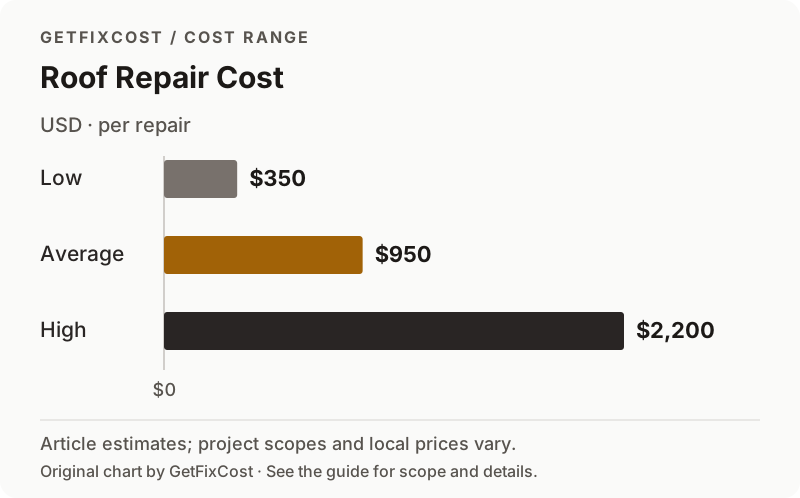
Repairing a residential roof in the United States typically costs between $350 and $2,200, with the national average centering at $950 for a standard professional repair addressing localized leaks, wind-blown shingles, or deteriorated pipe boots.
Minor spot repairs—such as resealing flashing around a single plumbing vent stack or replacing 5 to 10 blown-off asphalt shingles—generally cost between $250 and $600. Major repairs involving tearing out deteriorated chimney step flashing, replacing rotted plywood decking sheets, or stripping and rebuilding a rotted valley transition range from $1,200 to $2,800. Emergency repairs during active rainstorms carry an additional $200 to $500 surcharge for emergency tarping.
Addressing a roof leak promptly is one of the most critical maintenance responsibilities of homeownership. A minor $400 flashing repair left unaddressed through several rainy months quickly turns into thousands of dollars in rotted roof trusses, ruined attic insulation, and toxic ceiling mold.
Quick-Reference Cost Table
| Repair Scope | Average Cost Range | Repair Time | Materials Involved | Typical Cause |
|---|---|---|---|---|
| Plumbing Vent Boot Replacement | $250 – $450 | 1 – 2 Hours | Neoprene/lead flashing boot | UV dry-rot and cracked rubber gasket |
| Wind-Damaged Shingle Patch (5–15 Shingles) | $300 – $650 | 2 – 3 Hours | Matching shingles, roofing nails | Wind gusts lifting unsealed shingles |
| Chimney Step & Counter Flashing | $600 – $1,400 | 3 – 5 Hours | Aluminum/copper step flashing, sealant | Rusted metal, deteriorated mortar joints |
| Skylight Leak Re-Flashing | $500 – $1,200 | 3 – 4 Hours | Factory flashing kit, ice/water barrier | Dried out perimeter seals and gaskets |
| Valley Flashing & Underlayment Repair | $800 – $1,800 | 4 – 6 Hours | W-valley metal, synthetic underlayment | Heavy water flow eroding shingle valley |
| Emergency Tarping Service | $300 – $750 | 1 – 2 Hours | Heavy woven tarp, 2x4 furring strips | Immediate storm damage leak mitigation |
Cost Factors That Impact Total Pricing
Several technical and physical elements dictate your final roof repair invoice:
- Roof Pitch & Height: Working on a steep 8/12 or 10/12 pitch roof requires roof jacks, harness anchor systems, and slow movement, increasing labor costs by 25% to 40% compared to a walkable 4/12 slope. Multi-story homes require 32-foot extension ladders, further raising mobilization time.
- Underlying Decking Rot: If water has seeped past the shingles for months, the underlying OSB or plywood sheathing rots. Replacing damaged plywood sheets costs $75 to $125 per 4x8 sheet in materials and labor.
- Roofing Material Type: Asphalt shingles are inexpensive and easy to manipulate ($300 to $600 repair). Repairing concrete tile, natural slate, or standing-seam metal requires specialized craftsmanship and rare matching pieces, raising repair costs to $800 to $2,500.
- Locating the Leak Source: Finding the true entry point of a roof leak is often challenging. Water frequently penetrates a cracked ridge cap 20 feet uphill, travels along a roof rafter, and drips onto a bedroom ceiling far away. Diagnostic water testing adds $150 to $350 in labor.
- Emergency & Storm Surcharges: Requesting immediate service during a weekend thunderstorm or following a severe regional hailstorm adds premium emergency callout fees.
Regional Cost Variations Across the US
Labor rates and climate factors influence roof repair pricing across the country:
- West Coast (CA, WA, OR): High contractor labor wages ($90–$140/hr) place typical spot repairs between $500 and $1,400.
- Northeast (NY, MA, PA): Multi-story Victorian and colonial homes with complex slate, tile, or steep asphalt pitches average $450 to $1,300.
- Midwest (IL, OH, MI): Readily accessible ranch homes and abundant roofing trade labor keep repairs around $350 to $850.
- Southeast & Florida (FL, TX, GA): Severe tropical wind and intense UV radiation require high-adhesion mastic and reinforced flashing, averaging $400 to $1,100.
Repair vs. Replace: How to Decide
Homeowners should evaluate roof repair feasibility against total roof age:
- When to Repair: If your asphalt roof is under 12 to 15 years old, shingles remain flexible with intact granule coatings, and leaks are confined to a single area, repair is the clear economic winner.
- When to Replace: If your roof is 18 to 22 years old, shingles are brittle, shedding mineral granules into gutters, or widespread leaks appear in multiple rooms, spot repairs are a temporary waste of money. Nailing into brittle shingles causes adjacent tabs to crack.
- The 50% Rule: If the cost of extensive flashing and slope repairs exceeds 50% of the price of a complete tear-off and replacement, invest the funds into a new roof system with a fresh 30-year warranty.
DIY vs. Hiring a Professional & Safety Warnings
Applying a temporary roof tarp or spreading asphalt mastic around a leaking plumbing boot on a single-story, low-pitch roof is feasible for confident DIYers.
However, all significant roof repairs should be performed by licensed roofing professionals.
Roof falls remain the single leading cause of accidental construction fatalities in the United States. Walking on wet, mossy, or steep shingles without OSHA-compliant fall protection invites catastrophic injury. Furthermore, improper DIY repairs—such as slathering roofing tar over shingles instead of properly sliding in step flashing—traps water inside the roof assembly and accelerates wood rot.
Warning Signs You Need Action Immediately
Watch for these critical warnings that your roof requires immediate repair:
- Water Spots on Ceilings or Walls: Brown water rings on ceiling drywall indicate moisture has penetrated through the attic and ceiling insulation.
- Missing or Wind-Torn Shingles: Bare patches exposing black underlayment felt leave your plywood decking vulnerable to immediate rain rot.
- Cracked Rubber Plumbing Boots: Over 6 to 10 years, sunlight dry-rots neoprene rubber boots around plumbing vent pipes, opening gaps directly into your attic.
- Granules Piling in Gutters: Excessive granule shedding indicates shingles have lost their protective UV coating and are nearing failure.
- Spongy Spots When Walking: Soft, springy sensations on the roof surface indicate advanced rot in the plywood sheathing underneath.
Hidden Costs & Contractor Pitfalls
Be vigilant regarding these common extra expenses on roof repair estimates:
- Attic Insulation Replacement: Water-damaged fiberglass or cellulose insulation loses its thermal R-value and breeds mold, costing $300 to $800 to remove and replace.
- Drywall & Paint Repair: Roofers fix leaks on the exterior; repairing damaged ceiling drywall and painting stains adds $250 to $600 for a painter.
- Fascia Board Rot: Leaking roof edges often rot the horizontal fascia board behind gutters, costing $15 to $30 per linear foot to replace.
- Minimum Service Call Fees: Most established roofing contractors charge a minimum mobilization fee of $250 to $400, even if the physical repair takes only 20 minutes.
How to Save Money and Vet Contractors
Protect your budget with these practical homeowner strategies:
- Keep Extra Shingle Bundles: When replacing a roof, save one or two leftover shingle bundles in your garage. Having matching weathered shingles on hand saves hours of hunting for discontinued colors during a repair.
- Inspect Flashing Annually: Visually inspect your chimney flashing and plumbing boots every autumn. Replacing a $40 boot preventively saves thousands in leak damage.
- Hire Dedicated Local Roofers: Avoid storm-chaser contractors knocking on doors after storms. Choose licensed local companies with permanent physical addresses.
- Demand Itemized Invoices: Ensure your contractor specifies whether plywood decking replacement, new flashing, and ice/water shield barriers are included in the quote.
Typical Project Timeline & Process
A professional roof repair typically proceeds through these stages:
- Phase 1: Inspection & Water Testing (30 to 60 Minutes): The roofer climbs the roof, traces leak pathways, inspects attic rafters, and pinpoints the entry failure.
- Phase 2: Removal of Damaged Area (1 to 2 Hours): Shingle tabs are carefully unsealed with a flat pry bar, damaged nails are pulled, and rotted flashing or wood is removed.
- Phase 3: Rebuilding & Flashing (1 to 3 Hours): New ice and water shield is applied, step flashing or vent boots are interlaced with shingle courses, and replacement shingles are hand-nailed.
- Phase 4: Cleanup & Sealing (30 Minutes): Shingle tabs are resealed with asphalt adhesive, and the surrounding yard is swept with a rolling magnet to collect nails.
Next Steps & Estimate Checklist
Before hiring a roofing repair contractor, complete these steps:
- Place a bucket under active leaks and take clear photos of water damage for insurance records.
- Photograph missing shingles or damaged flashing from the yard using your smartphone or binoculars.
- Solicit written quotes from two or three licensed local roofing contractors and demand itemized work scopes.
Frequently Asked Questions
01. How much does it cost to fix a leaking roof on average?
02. What is the most common cause of roof leaks?
03. How much do roofers charge per hour for repairs?
04. Can you repair a roof instead of replacing it?
05. Does homeowners insurance cover roof repairs?
Related Cost Guides
More in this trade →
Repair or Replace Roof: How to Decide
Understand when to repair versus replace your roof, including age factors, damage assessments, and cost comparisons.
Roof Replacement Cost
Learn roof replacement costs by material: asphalt shingles, metal, tile, and slate, including labor and tearoff fees.