Project Overview & Direct Cost Answer
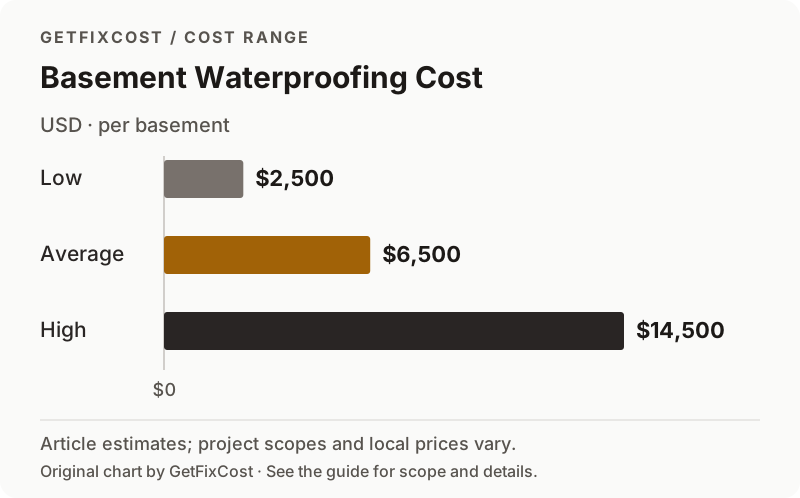
Waterproofing a residential basement in the United States typically costs between $2,500 and $14,500, with the national average centering at $6,500 for a standard interior perimeter drainage system and dual-pump sump basin in an average 1,000 square foot basement.
Minor moisture remediation—such as extending downspouts, regrading soil along the foundation, and filling hairline cracks with high-pressure polyurethane foam—starts between $1,500 and $3,000. Comprehensive interior waterproofing involving jackhammering the perimeter floor, laying perforated French drain tiles in crushed gravel, installing wall vapor barriers, and plumbing a high-output battery backup sump pump averages $5,000 to $9,500 ($50 to $100 per linear foot). Full exterior excavation down to foundation footers with waterproof rubber membranes and exterior drainage boards ranges from $12,000 to $25,000+.
Water seepage through basement walls and cove joints (where the concrete slab meets the foundation wall) is driven by hydrostatic pressure from high water tables. Left unaddressed, damp basements cause structural concrete spalling, wood sill rot, and hazardous mold growth that compromises indoor air quality throughout the home.
Quick-Reference Cost Table
| Waterproofing Method | Cost Range (Linear Foot or Unit) | Typical 1,000 Sq Ft Basement | Expected Lifespan | Primary Benefit |
|---|---|---|---|---|
| Interior Perimeter Drain (French Drain) | $50 – $100 / Linear Foot | $5,000 – $9,500 | 30 – 50+ Years | Relieves hydrostatic water pressure under slab |
| Cast-Iron Submersible Sump Pump | $800 – $1,800 Installed | $1,200 – $2,500 (w/ backup) | 7 – 10 Years | Automatically discharges groundwater away from home |
| Foundation Crack Epoxy Injection | $350 – $800 / Crack | $1,050 – $2,400 (3 cracks) | 10 – 20 Years | Seals non-structural leaking shrinkage cracks |
| Vapor Barrier Wall Membrane | $3.00 – $6.00 / Sq Ft Wall | $2,400 – $4,800 | 25 – 40 Years | Directs wall seepage down into drain tile |
| Exterior Waterproofing Excavation | $150 – $300 / Linear Foot | $14,000 – $26,000 | 30 – 50 Years | Stops water outside before it penetrates concrete |
Cost Factors That Impact Total Pricing
Several crucial factors determine the final investment for basement waterproofing:
- Linear Footage of Foundation Perimeter: Basements are measured by linear perimeter feet. A standard 1,000 sq ft basement typically has 120 to 140 linear feet of foundation walls.
- Interior vs. Exterior Scope: Interior drainage is far more popular and affordable because it avoids excavating porches, driveways, air conditioning units, and mature landscaping around the home exterior.
- Basement Finishing Condition: Unfinished basements allow rapid concrete trenching. Finished basements require removing drywall, framing, and flooring along the bottom 2 feet of the wall, adding $1,500 to $3,500 in demolition and reconstruction labor.
- Sump Pump Redundancy & Battery Backup: Installing a primary 1/2-HP cast-iron sump pump plus an independent 12V battery-backup pump with dual float switches adds $600 to $1,200, but guarantees basement protection during storm power outages.
- Exterior Discharge Routing: Pumping discharge water 20 to 50 feet away from the home into a buried pop-up emitter or municipal storm connection adds $500 to $1,500 in exterior trenching.
Regional Cost Variations Across the US
Soil types, rainfall levels, and regional construction styles create pricing differences:
- Midwest (IL, OH, MI, WI): Heavy clay soils (which expand when wet) and high water tables make interior drainage systems standard. Competitive contractor networks keep costs around $5,200 to $8,500.
- Northeast (NY, PA, MA, NJ): Older stone and fieldstone foundations with mortar deterioration require custom masonry repointing and heavy vapor liners, averaging $6,500 to $11,500.
- Mid-Atlantic (MD, VA, NC): Abundant rainfall and rolling topography place interior French drain systems at $5,800 to $9,800.
- Pacific Northwest (WA, OR): Continuous winter rain saturates soils, requiring heavy-duty dual-pump sump systems, averaging $6,000 to $10,500.
Repair vs. Replace: How to Decide
Evaluate your water issue using this structured diagnostic framework:
- When to Apply Surface Fixes: If moisture is limited to light condensation on concrete walls during summer, running an Energy Star basement dehumidifier ($250 to $400) and painting walls with waterproof masonry sealant ($200 DIY) is often sufficient.
- When to Address Gutters First: 80% of minor basement moisture originates on the roof. Extending downspouts 10 feet away from the foundation and sloping exterior soil away from walls for $200 to $600 resolves many moisture issues without trenching.
- When Full Drainage is Mandatory: If water puddles on the floor during heavy rains, water seeps through the floor-to-wall cove joint, or efflorescence (white mineral powder) covers the lower block courses, hydrostatic pressure requires a permanent interior perimeter French drain.
DIY vs. Hiring a Professional & Safety Warnings
Homeowners can easily maintain exterior downspout extensions, test sump pump float switches quarterly, and apply low-pressure crack sealant kits.
However, installing a sub-floor drainage system is intense structural trade labor.
Operating 60-pound electric jackhammers to trench concrete slabs generates hazardous crystalline silica dust requiring OSHA-compliant HEPA dust containment and respirators. Chipping concrete without locating sub-slab plumbing lines risks breaking main sewer laterals. Furthermore, improper slope on perforated drain tiles will cause water to pool beneath the slab rather than gravity-draining to the sump pit. Professional waterproofing crews complete the job in two days with industrial concrete cutters, dust extractors, and lifetime dry-basement warranties.
Warning Signs You Need Action Immediately
Inspect your basement for these definitive symptoms of groundwater intrusion:
- Water Seeping at Floor-Wall Joint (Cove Joint): Indicates high hydrostatic water pressure building up beneath the footing.
- White Powdery Substance on Walls (Efflorescence): Mineral salts left behind as moisture evaporates through concrete blocks, indicating chronic water migration.
- Musty Smell & Black Mold Growth: Mold colonizing drywall, baseboards, or stored cardboard indicates sustained indoor relative humidity above 60%.
- Rust Stains on Furnace or Water Heater Base: Rust on mechanical appliances indicates standing water has accumulated on the concrete floor.
- Horizontal Cracks or Inward Bowing Walls: Excessive exterior water saturation creates hydrostatic pressure that pushes concrete walls inward, signaling imminent structural foundation damage.
Hidden Costs & Contractor Pitfalls
Scrutinize waterproofing quotes for these commonly excluded items:
- Electrical Outlet for Sump Pump: Sump pumps require a dedicated 15-amp or 20-amp GFCI electrical circuit. If none exists near the pit, an electrician must wire one for $250 to $500.
- Finished Wall Demolition: Cutting away drywall, baseboards, and wall studs to access the perimeter concrete costs $1,000 to $2,500.
- Radon Mitigation Integration: If your home has a radon mitigation system, the new sump pit basin and perimeter drainage system must be hermetically sealed to prevent radon gas entry, adding $300 to $600.
- Exterior Freeze Guards: In northern climates, exterior discharge pipes can freeze in winter. Installing an open-air anti-freeze relief fitting costs $100 to $200.
How to Save Money and Vet Contractors
Maximize your basement waterproofing investment with these steps:
- Fix Exterior Grading First: Ensure soil slopes downward at least 6 inches over the first 10 feet away from your foundation. Clean gutters and extend downspouts before signing a multi-thousand-dollar contract.
- Insist on Transferable Lifetime Warranties: Reputable waterproofing companies provide transferable lifetime warranties on interior drainage systems, protecting resale value.
- Compare Multiple Bids: Obtain three written quotes from established local basement waterproofing specialists rather than general handymen.
- Choose Cast-Iron Sump Pumps: Demand commercial-grade cast-iron submersible pumps (like Zoeller M53 or M98) over cheap plastic pumps that burn out quickly.
Typical Project Timeline & Process
A standard interior basement waterproofing project takes 2 to 3 days:
- Phase 1: Protection & Trenching (Day 1): Crews lay protective plastic sheeting, set up HEPA air scrubbers, and jackhammer a 12-inch wide trench through the concrete floor along the perimeter walls.
- Phase 2: Drainage & Basin Installation (Day 2): Perforated drain pipe is laid in washed gravel, cleanout ports are positioned, the heavy polyethylene sump basin is installed, and dimpled wall membrane is fastened.
- Phase 3: Concrete Re-Pouring & Cleanup (Day 3): High-strength concrete is mixed and troweled flush with the existing floor, the primary and backup pumps are wired and plumbed, and the basement is left broom-clean.
Next Steps & Estimate Checklist
Before scheduling waterproofing consultations, complete this checklist:
- Inspect your gutters and verify downspouts discharge at least 8 to 10 feet from foundation walls.
- Note whether water enters through wall cracks, the floor-wall cove joint, or basement windows.
- Solicit three comprehensive in-home estimates from licensed basement waterproofing specialists.
Frequently Asked Questions
01. How much does it cost to waterproof a basement on average?
02. How much does interior basement waterproofing cost per linear foot?
03. What is the difference between interior and exterior waterproofing?
04. How long does professional basement waterproofing last?
05. Does basement waterproofing increase home value?
Related Cost Guides
More in this trade →
Crawl Space Encapsulation Cost
Understand crawl space encapsulation costs for vapor barriers, insulation, dehumidifiers, and full structural upgrades.
Foundation Cracks: Which Are Worth Fixing?
Learn when foundation cracks are worth fixing, including severity assessments and repair cost comparisons.
Foundation Repair Cost
Get realistic foundation repair costs by method: push piers, carbon fiber straps, epoxy injection, and I-beam bracing.