Project Overview & Direct Cost Answer
Deciding whether to repair or replace your residential water heater comes down to three objective criteria: the age of the tank, the exact location of the leak or failure, and the 50% Rule.
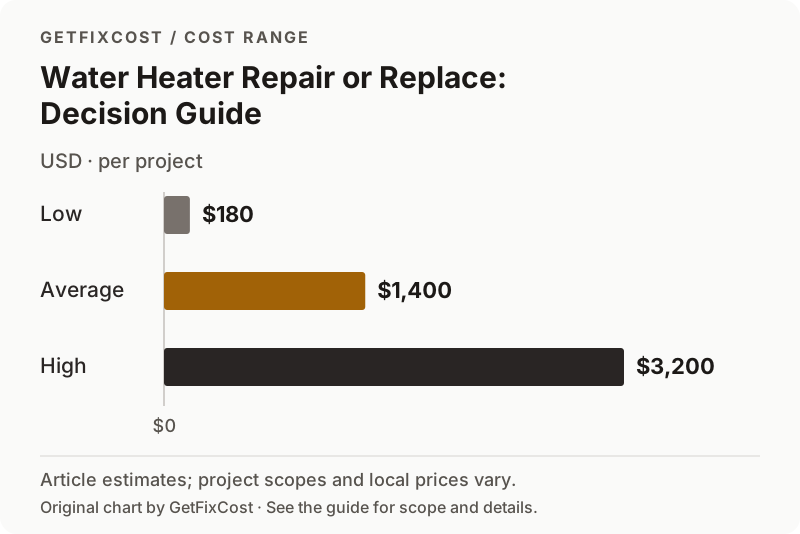
A professional water heater repair typically costs between $180 and $450, resolving issues such as burnt-out electric heating elements, faulty thermostats, malfunctioning thermocouples, or leaking temperature and pressure (T&P) relief valves. In contrast, replacing a standard residential tank water heater averages $1,400 to $3,200 fully installed.
If your water heater is less than 6 to 8 years old and the steel tank itself is not leaking water, repairing individual mechanical components is almost always the smartest, most economical move. However, if your water heater has reached 10 to 12 years of age or water is weeping from the bottom of the tank jacket, no repair is physically possible—the inner steel tank has rusted through, and complete replacement is mandatory to avoid catastrophic basement flooding.
Quick-Reference Cost Table
| Symptom or Component | Average Repair Cost | Tank Age Limit | Feasibility of Repair | Recommended Action |
|---|---|---|---|---|
| Electric Heating Element | $150 – $300 | Any age (<10 Yrs) | Very High | Repair; replace element & flush sediment |
| Gas Thermocouple / Pilot | $150 – $275 | Any age (<10 Yrs) | Very High | Repair; quick, inexpensive technician fix |
| T&P Relief Valve Leaking | $160 – $320 | Any age (<10 Yrs) | High | Repair; replace safety valve and check expansion |
| Gas Control Valve / Thermostat | $350 – $650 | Under 6 Years | Moderate | Repair if under warranty; replace if old |
| Tank Bottom Rusting / Leaking | Not Repairable | Any age | Impossible | Replace immediately; tank failure is irreversible |
| New 50-Gal Gas Tank Installed | $1,300 – $2,800 | 8 – 12 Yr Lifespan | N/A | Full replacement resets safety & efficiency |
Cost Factors That Impact Total Pricing
Several technical and regulatory variables shape water heater repair and replacement pricing:
- Fuel Source (Natural Gas vs. Electric): Electric water heaters feature simpler components (elements and thermostats) that are inexpensive to troubleshoot and repair ($150–$300). Gas units feature combustion chambers, gas valves, and exhaust venting that demand specialized plumbing diagnostics ($200–$550).
- Atmospheric Vent vs. Power Vent: Traditional atmospheric gas heaters vent by natural convection through a metal chimney. Power-vent water heaters use an electric motor to blow exhaust horizontally through PVC pipes. Power-vent replacement units cost $500 to $1,000 more in equipment.
- Thermal Expansion Tank Requirements: Most municipal plumbing codes now mandate a thermal expansion tank ($150 to $350 installed) on closed plumbing systems to absorb pressure spikes caused by water heating.
- Permits & Code Upgrades: Replacing a water heater requires a municipal plumbing permit ($50 to $150), gas shutoff valve replacement, drip leg sediment traps, and earthquake strapping in seismic zones (CA, WA, OR).
- Location & Accessibility: Heaters installed in open basements are fast to swap. Heaters located in narrow attic crawl spaces or tight closets requiring door removal add $200 to $400 in labor.
Regional Cost Variations Across the US
Plumbing wage rates and regional codes cause noticeable price differences:
- West Coast (CA, WA, OR): Strict low-NOx emissions standards and seismic strapping mandates place average replacements at $1,600 to $3,200.
- Northeast (NY, MA, PA): Older multi-story homes, tight basement bulkheads, and high journeyman rates yield averages of $1,500 to $2,900.
- Midwest (IL, OH, MI): Readily accessible basement utility rooms and competitive plumbing markets keep standard replacements around $1,200 to $2,200.
- Southeast & Texas (FL, TX, GA): Lower contractor overhead keeps standard 50-gallon electric swaps around $1,100 to $2,000, though attic installations common in the South can add labor.
Repair vs. Replace: How to Decide
Follow these four rules of thumb to determine whether to repair or replace:
- The 10-Year Rule: The average service life of a glass-lined tank water heater is 8 to 12 years. If your unit is 8 years old or older and requires a repair costing more than $250, replace the unit. Investing in an aging tank risks catastrophic rupture within months.
- The Leaking Tank Rule: If water is pooling beneath the water heater and you have verified it is not coming from a loose supply pipe fitting or the T&P valve discharge tube, the steel tank has breached. Tanks cannot be welded, patched, or epoxied. Replace immediately.
- The 50% Rule: If the written repair estimate exceeds 50% of the cost of a brand-new installed unit, always choose replacement to gain a new 6 to 10-year manufacturer warranty.
- Manufacturer Warranty Coverage: Look at the data plate for the serial number. If your unit is within its 6-year or 10-year warranty window, the manufacturer will provide free replacement parts or a credit toward a new tank.
DIY vs. Hiring a Professional & Safety Warnings
Homeowners can safely tackle minor preventive maintenance, such as flushing mineral sediment from the bottom drain valve once a year or testing the T&P relief valve trip lever.
However, all gas line connections, electrical circuit modifications, and complete unit replacements require a licensed plumber.
Water heaters combine pressurized boiling water, explosive natural gas, and high-voltage electrical circuits. A malfunctioning pressure relief valve can cause a water heater to build catastrophic steam pressure, turning the tank into an explosive rocket capable of launching through multiple floors. Furthermore, improper gas flue connections cause lethal carbon monoxide gas to spill into household living spaces. Plumbers pull permits and verify gas line tightness using liquid leak detectors.
Warning Signs You Need Action Immediately
Watch for these clear symptoms of water heater distress:
- Water Leaking Around the Base: Water weeping from the bottom metal casing indicates internal tank glass liner failure.
- Rusty or Discolored Hot Water: If hot water runs brown or reddish while cold water runs crystal clear, the interior steel tank or anode rod is actively corroding.
- Popping, Rumbling, or Banging Sounds: As mineral sediment builds up in the bottom of the tank, water gets trapped underneath and boils violently, producing loud popping sounds that accelerate tank cracking.
- Lukewarm or Inadequate Hot Water: Indicates failed electric heating elements or heavy sediment accumulation insulating the burner from the water.
- Corrosion on Pipe Connections: Heavy green or white corrosion on the cold water inlet and hot water outlet nipples indicates dielectric failure and imminent fitting rupture.
Hidden Costs & Contractor Pitfalls
Be aware of these frequently overlooked extras on plumbing estimates:
- Thermal Expansion Tank Installation: Required by plumbing code in closed municipal systems, adding $150 to $350.
- Emergency Drain Pan and PVC Drain Line: Water heaters located in living areas or attics require a water-tight aluminum or plastic pan piped to an exterior drain, adding $100 to $250.
- Gas Shutoff Valve & Sediment Trap: Replacing corroded brass gas valves and installing an updated vertical dirt leg trap adds $100 to $200.
- Haul-Away & Disposal Fees: Plumbers typically charge $50 to $120 to drain, haul away, and recycle the heavy old water heater.
How to Save Money and Vet Contractors
Maximize your hot water investment with these smart consumer tips:
- Flush the Tank Annually: Spending 20 minutes once a year connecting a garden hose to the drain valve flushes sediment out, extending tank lifespan by 3 to 5 years.
- Consider a Heat Pump Water Heater (Hybrid): Hybrid electric heat pump water heaters cost more upfront ($2,200 to $3,800 installed) but qualify for federal IRA tax credits up to $2,000 and cut hot water electric bills by up to 70%.
- Request Three Written Itemized Estimates: Require contractors to quote the complete turnkey price, including new supply lines, gas flex pipes, permits, and old tank haul-away.
- Check Serial Number for Warranty Coverage: Before paying for out-of-pocket repairs, verify your warranty status on the manufacturer website.
Typical Project Timeline & Process
A standard water heater repair or replacement proceeds as follows:
- Phase 1: Diagnosis & Preparation (30 Minutes): The plumber tests electrical elements with a multimeter or inspects the gas control valve and pilot assembly.
- Phase 2: Draining & Removal (1 Hour): Water supply is shut off, and a drain hose empties 40 to 50 gallons of water into a floor drain or driveway before disconnecting pipes.
- Phase 3: New Tank Installation (2 to 3 Hours): The new tank is leveled, copper or stainless supply lines are connected, gas/electric lines are secured, and the expansion tank is installed.
- Phase 4: Filling & Testing (30 Minutes): The tank is completely filled with water before energizing the heating elements, gas lines are bubble-tested, and water temperature is calibrated to 120°F.
Next Steps & Estimate Checklist
Before calling local plumbing contractors, gather this information:
- Photograph your water heater label showing the model number, serial number, and gallon capacity.
- Check the floor for active water pooling to determine if this is an emergency replacement.
- Request written itemized quotes from three licensed local plumbers including permits and disposal.
Frequently Asked Questions
01. What is the 10-year rule for water heaters?
02. Can a leaking water heater tank be repaired?
03. How much does it cost to repair a water heater?
04. How do I know if my water heater is still under warranty?
05. Is it worth replacing an anode rod on an older water heater?
Related Cost Guides
More in this trade →
Tankless vs Tank Water Heater Cost
Compare tankless versus traditional water heater costs, including installation, operating expenses, and lifespan.
Water Heater Replacement Cost
Find out water heater replacement costs for tank and tankless models, including gas and electric installation.
Whole House Repiping Cost
Understand whole-house repiping costs for copper, PEX, and CPVC pipe materials, including labor and wall repairs.